Skip to content
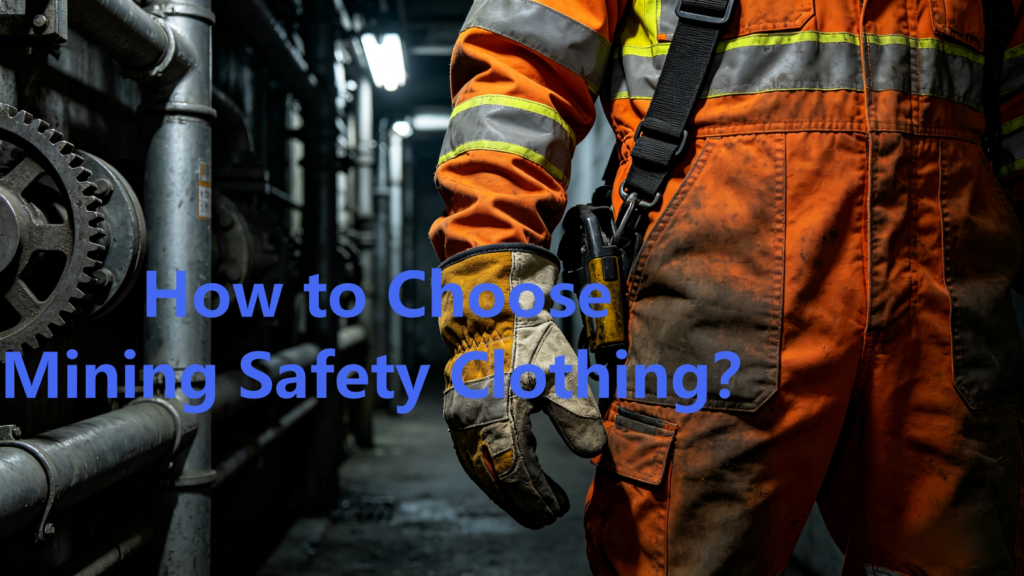
The selection of mining safety clothing should focus on risk protection, working condition matching, and compliance standards, avoiding solely considering price or appearance.
1. Basic Protection Requirements
Mining safety clothing must be abrasion-resistant and tear-resistant to cope with rock friction and mechanical damage; high visibility (reflective strips) is necessary for low-light or nighttime environments; it should provide some dust protection in dusty environments; if there is a risk of ignition or high temperatures, flame-retardant (FR) fabric should be chosen; and waterproof or oil-resistant functions are required when necessary.
2. Standards and Certifications
Common standards include:
- EN ISO 20471 (High Visibility)
- EN ISO 11612 (Flame Retardant Protection)
- EN 13034 (Protection Against Chemical Splashes)
- ANSI/ISEA 107 (American Standard for High Visibility)
Choosing certifications that comply with project or local regulations is a fundamental requirement for participating in engineering and bidding processes.
3. Working Condition Selection
- Underground Mines/Low-Light Environments: High Visibility + Abrasion-Resistant Fabric
- Open-Pit Mines/High-Temperature Environments: Lightweight and Breathable + UV Protection
- Dust Environments: Dustproof Design (Closed Cuffs/Stand-Up Collar)
- Chemical Mines: Chemical Splash Resistant Fabric
- High-Temperature or Welding Environments: Flame Retardant (FR) Clothing
4. Comfort and Functionality
For extended work periods, choose a breathable, well-fitting design; multiple pockets for easy tool carrying; elastic or patchwork designs enhance mobility; and ensure washability and durability to reduce replacement frequency.
Passion Safety China (PSC) can provide customized safety clothing solutions for partners based on different mining environments.