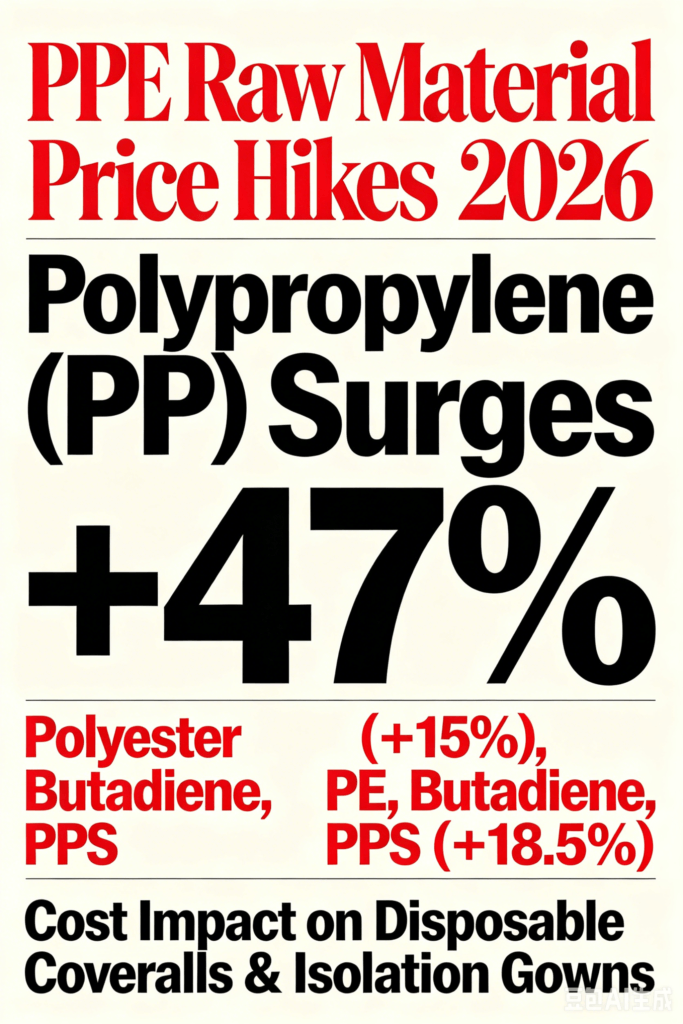
Five key raw materials are causing the current PPE cost inflation, with clear impacts on different mainstream products:
1. Polypropylene (PP) | Largest Price Surge (+47% in 3 Months)
As the base material for PP non-woven and SMS fabrics, PP price hikes stem from tight spot supply and factory maintenance. It directly raises costs for ordinary disposable coveralls and basic isolation gowns.
2. Polyester POY & Chemical Fiber (+15% H1 2026)
Driven by higher crude oil prices, polyester enhances fabric toughness. It mainly affects tear-resistant SMS coveralls and thick industrial protective clothing.
3. Polyethylene (PE) Lamination Materials (Steady Growth)
Vital for waterproof coating and CPE materials, rising PE prices increase costs for waterproof SMS laminated coveralls and CPE waterproof isolation gowns.
4. Butadiene Elastic Auxiliaries (Q2 Continuous Rise)
Used for elastic cuffs, ankle bands and hood accessories, this material’s growth pushes up costs of fitted medical and sealed industrial coveralls.
5. PPS High-End Fabric (+18.5% Month-on-Month in May)
A high-performance anti-static and corrosion-resistant material, PPS price hikes impact high-grade chemical-resistant and anti-static industrial PPE.
Lock costs for hot-selling conventional products to cope with peak-season demand, control inventory risks for special models, and cooperate with high-quality manufacturers to achieve stable and profitable operations throughout the year.