Skip to content
Electrical Insulated Gloves Water Immersion Test Method
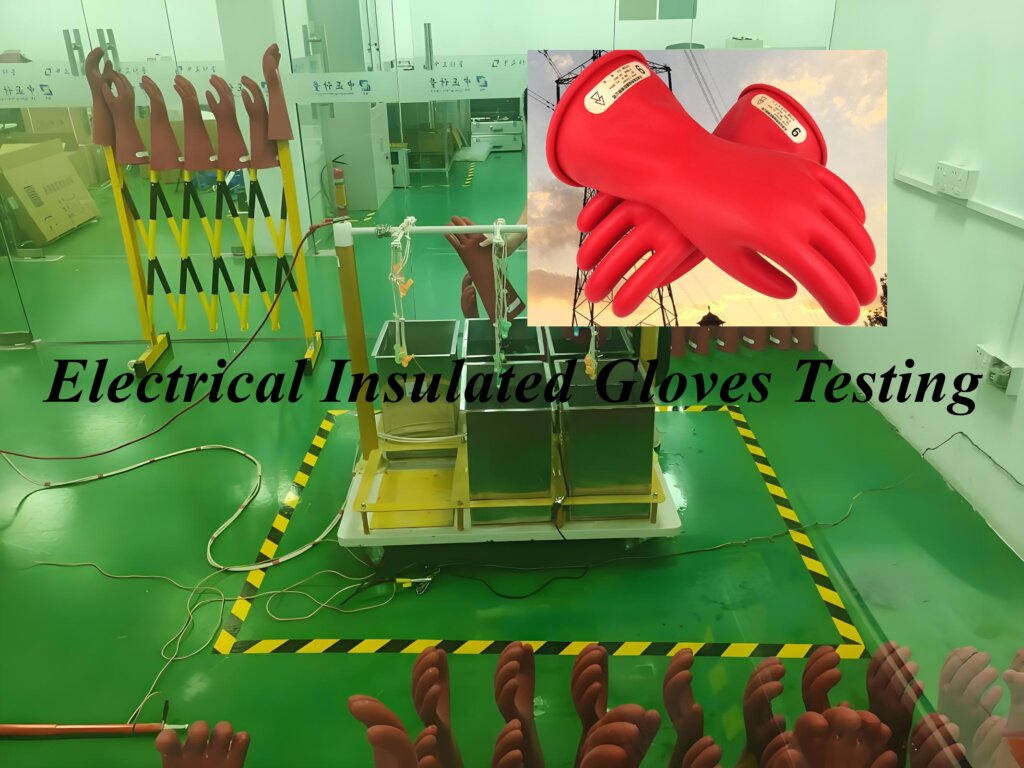
Most electrical insulated gloves are tested using the water immersion dielectric test, which is one of the most reliable methods to verify insulation performance and safety.
Key Testing Procedure
1️⃣ Visual Inspection
Before testing, each glove must undergo a thorough visual check.
Inspect for cracks, pinholes, aging, contamination, or any physical damage.
👉 Any defective glove must be rejected before electrical testing.
2️⃣ Water Filling
The glove is filled with water to a specified level (typically about 50 mm below the cuff edge).
At the same time, the outer tank is also filled with water.
👉 This creates internal and external water electrodes.
3️⃣ Electrode Connection
- Inner water = one electrode
- Outer water = another electrode
Both are connected to a high-voltage testing system.
At Passion Safety China (PSC):
- Inner water → Negative electrode
- Outer water → Positive electrode
4️⃣ Voltage Application
An AC test voltage is applied according to the glove class.
- Standard duration: 1–3 minutes
- PSC standard: 3 minutes (stricter and more reliable)
5️⃣ Result Evaluation
Measure the leakage current to determine:
- Whether dielectric breakdown occurs
- Whether current exceeds standard limits
👉 If the glove fails, it must be immediately discarded.
⚠️ Important Safety Rule
Insulated gloves that fail the test:
- ❌ Cannot be repaired
- ❌ Cannot be reused
- ❌ Must not re-enter testing
At Passion Safety China (PSC), all failed gloves are destroyed to ensure that non-compliant products never enter the market.