Respiratory protection is essential in environments affected by dust, smoke, and airborne contaminants. One key technology behind effective protection is the filtration mechanism used in N95 respirators.
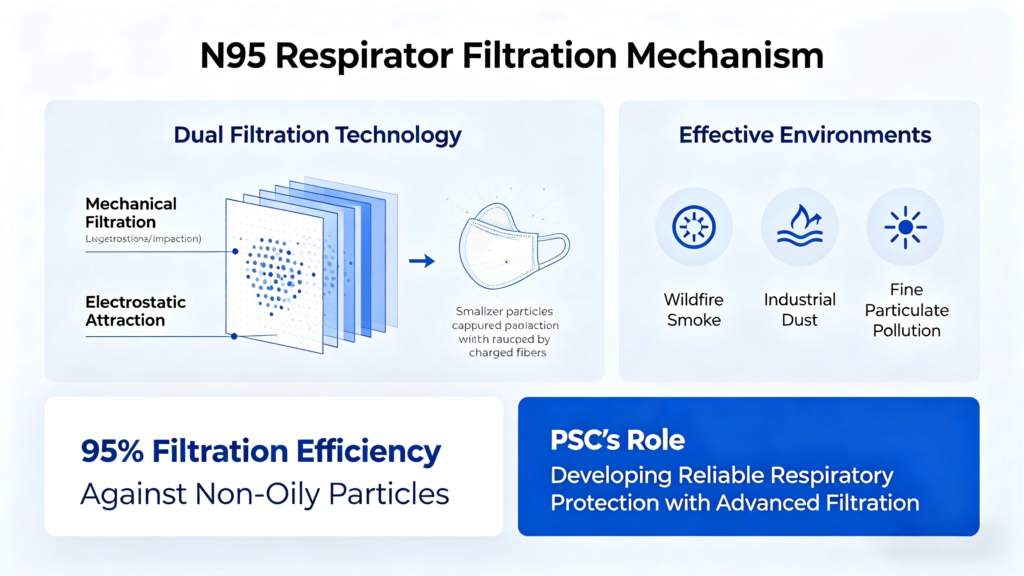
The core knowledge point is that N95 respirators do not rely only on simple physical blocking. Instead, they use a combination of mechanical filtration and electrostatic attraction. While larger particles are captured through interception and impaction, smaller particles are attracted and trapped by electrostatically charged fibers within the filter media.
This dual filtration mechanism allows N95 respirators to achieve at least 95 percent filtration efficiency against non-oily airborne particles. It is particularly effective in environments such as wildfire smoke, industrial dust, and fine particulate pollution.
Understanding this principle is important when selecting respiratory protection. A well-designed respirator provides both filtration efficiency and breathing comfort, ensuring consistent protection during extended use.
PSC focuses on developing reliable respiratory protection solutions that apply advanced filtration technology. Proper use of certified respirators can significantly reduce exposure to harmful airborne particles in demanding environments.