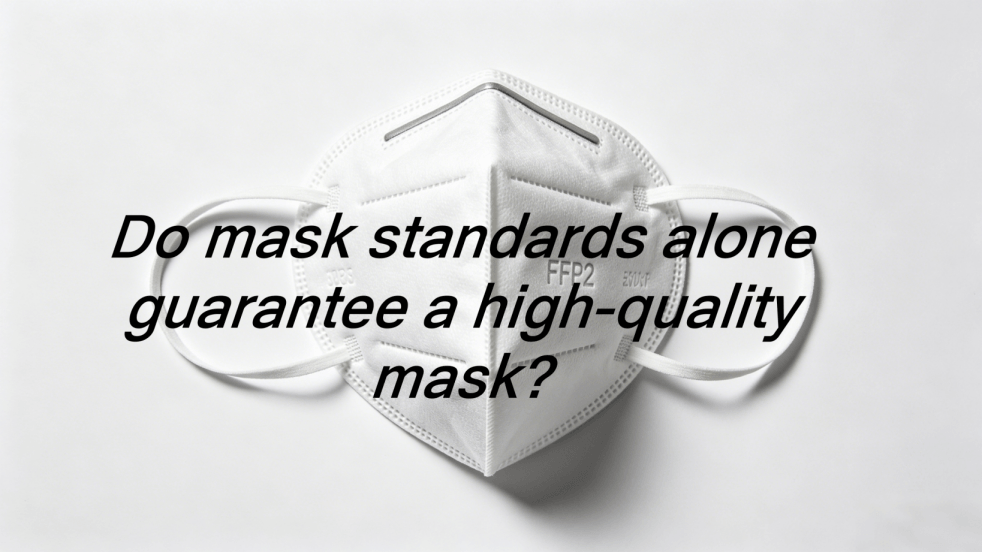
Do mask standards alone guarantee a high-quality mask?
Many people choose masks only by checking standards such as KN95, N95, or FFP2. These standards are important, but they are not the only factor that determines protection.
A mask may perform well in laboratory testing, but real protection also depends on fit, sealing performance, product quality, comfort, and the working environment.
Common Mask Standards
| Standard | Main Protection | Typical Use |
| KN95 | Airborne particles | Daily and industrial protection |
| N95 | Airborne particles | Medical and workplace use |
| FFP2 | Airborne particles | European respiratory protection |
| Surgical Mask | Droplets and fluids | Public and medical environments |
Why Fit Matters
Even a high-filtration mask cannot protect properly if air leaks around the face.
Users should check:
- Nose clip sealing
- Strap tightness
- Stability during movement
- Air leakage around cheeks and chin
Different Hazards Need Different Protection
| Hazard Type | Suitable Protection |
| Dust and particles | KN95 / N95 / FFP2 |
| Flu and public exposure | Surgical mask / KN95 |
| Chemical spraying | Respirator with chemical cartridges |
| Toxic gases or vapors | Gas and vapor respirator |
KN95 and N95 respirators do not protect against chemical gases or organic vapors.
Conclusion
Choosing a mask is not only about the printed standard. Real respiratory protection depends on proper fit, product quality, comfort, and selecting the correct respirator for the actual hazard.
Passion Safety China (PSC) cares about everyone’s health and safety. If you are unsure which respiratory protection product is suitable for your application, PSC is ready to provide reliable products and dependable support.