Skip to content
Electrical Insulating Gloves: A Complete Guide for Safe Work
Electrical hazards are among the top causes of workplace injuries in industries like power utilities, construction, and oil & gas. Selecting the right electrical insulating gloves is not only critical for protecting workers from electric shock but also for meeting mandatory safety standards worldwide.
As a professional Electrical Safety Gloves Supplier China, Passion Safety China (PSC) delivers reliable PPE solutions to global markets, including Europe and North America, with a focus on quality, compliance, and industrial safety.
What Are Electrical Insulating Gloves?
Electrical insulating gloves—also known as dielectric gloves—are specialized PPE designed to shield workers from electrical current. Crafted from high-grade rubber materials, these gloves provide effective insulation against dangerous voltages, making them indispensable for electrical work.
They are widely applied in:
- Electrical maintenance and repair
- Power distribution and transmission
- Industrial manufacturing operations
- Oil & gas exploration and processing
For companies sourcing PPE China products, insulating gloves are a core category in their electrical safety equipment lineup.
Understanding International Standards
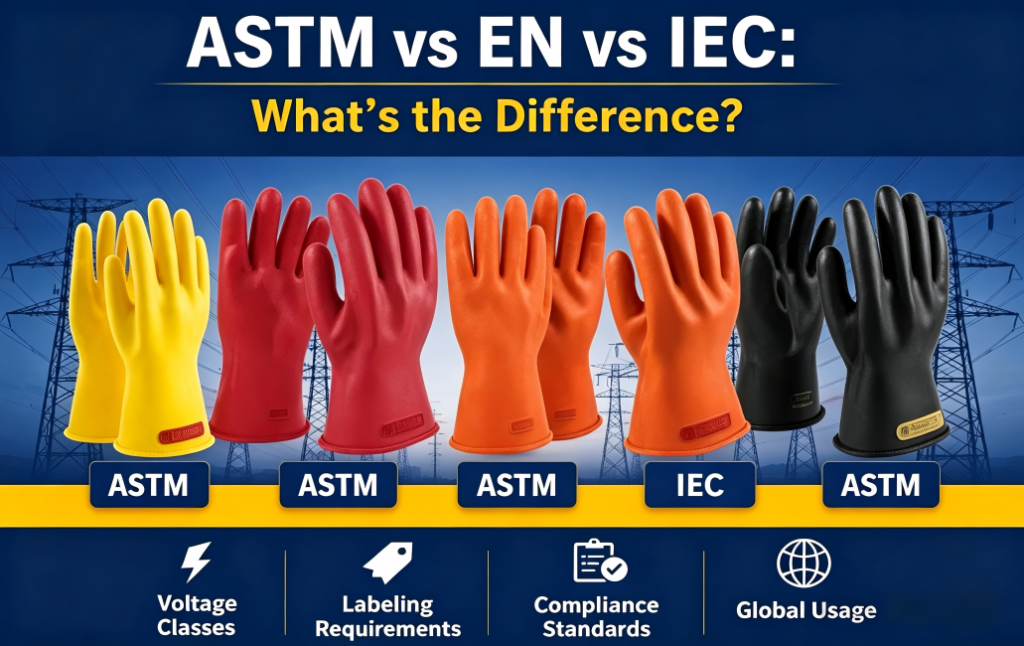
Compliance with international standards is non-negotiable when selecting electrical insulating gloves, as it guarantees product safety and market access. The key standards to consider are:
- IEC 60903: The most widely recognized global standard, adopted by most countries worldwide to ensure uniform safety performance.
- ASTM D120: Mandatory for the U.S. market, focusing on dielectric strength and durability to meet American safety requirements.
- EN 60903: Required for CE certification in Europe, ensuring gloves comply with EU safety regulations for industrial use.
These standards set strict criteria for electrical resistance, material durability, and overall safety, ensuring gloves perform reliably in high-risk environments.
Voltage Classes Explained
The voltage class is the most important factor when choosing insulating gloves, as it determines the maximum voltage the gloves can safely withstand. Below is a clear breakdown of standard voltage classes:
| Class | Maximum AC Voltage |
| Class 00 | 500 V |
| Class 0 | 1,000 V |
| Class 1 | 7.5 kV |
| Class 2 | 17 kV |
| Class 3 | 26.5 kV |
| Class 4 | 36 kV |
Key Tip: Always select gloves with a voltage rating higher than the working voltage to ensure optimal safety and avoid electrical hazards.
Materials and Performance
High-quality insulating gloves are made from specialized materials, each offering unique advantages to suit different industrial needs. Common materials include:
- Natural Rubber: Delivers excellent electrical insulation and flexibility, ideal for general electrical work.
- Latex: Offers improved comfort and elasticity, reducing hand fatigue during long hours of use.
- Synthetic Rubber: Provides superior resistance to oil, chemicals, and aging, making it suitable for harsh industrial environments.
Many gloves also come with additional protective features to meet specific industry demands, such as:
- Acid resistance (A)
- Oil resistance (H)
- Ozone resistance (Z)
- Low temperature resistance (C)
These features are particularly important for customers in demanding industries seeking reliable Safety China PPE solutions.
Why Leather Protectors Are Required
It’s important to note that insulating gloves are designed solely for electrical protection—not mechanical protection. For this reason, leather protector gloves must be worn over insulating gloves to:
- Prevent cuts, abrasions, and punctures that could damage the insulating layer
- Extend the service life of the insulating gloves
- Maintain consistent insulation performance during use
Wearing leather protectors is a standard requirement in both U.S. and European safety protocols, ensuring comprehensive worker protection.
Inspection and Maintenance
To ensure ongoing safety, insulating gloves must be regularly inspected and maintained. Follow these key practices:
- Perform an air test before each use to check for leaks or damage.
- Conduct a visual inspection for cracks, holes, or signs of wear.
- Schedule electrical testing every 6 months (recommended) to verify insulation performance.
Proper storage is also essential—keep gloves in a cool, dry area away from sunlight, oil, and chemicals to prevent material degradation.
Choosing the Right Supplier
When sourcing electrical insulating gloves from a Electrical Safety Gloves Supplier China, buyers should prioritize the following factors to ensure quality and compliance:
- Full compliance with IEC, ASTM, and EN standards
- Stable product quality and consistent performance
- Customization options to meet specific industry needs
- Proven export experience to EU and U.S. markets
Passion Safety China (PSC) is a trustedPPE China supplier, offering durable, certified insulating gloves designed to meet the rigorous demands of global industrial applications.
Final Thoughts
Electrical insulating gloves are a critical component of workplace safety, and understanding standards, voltage classes, and proper usage is key to reducing risks and ensuring operational safety. For companies seeking dependable dielectric gloves, partnering with an experienced Safety China supplier like PSC guarantees both quality and compliance, protecting your workers and your business.