Skip to content
In late 2024, a china coal mine entered its scheduled PPE replacement cycle for underground workers.
For years, the rule had been strict and unchanged: all underground workers must wear 100% cotton workwear. In coal mining environments, sparks from drilling and cutting are routine. Cotton is used because it does not melt or stick to skin, reducing the severity of burns. This standard had kept the site free from serious clothing-related burn incidents.
The procurement task was temporarily handled by Leon, a junior purchasing staff member. He had limited experience with mining safety requirements and mainly focused on delivery timelines and supplier coordination.
Three days before the deadline, the regular supplier informed Leon that production in Shaanxi could not meet the schedule and delivery would be delayed by ten days. Hundreds of workers would be affected if uniforms were not replaced on time.
Under pressure, Leon searched for an alternative and contacted a supplier in Hebei. The supplier offered immediate stock of a polyester-cotton blended uniform, cheaper and visually similar to the approved cotton version.
Without consulting the safety department or escalating the issue, Leon approved the substitution to avoid delay and ensure on-time delivery.
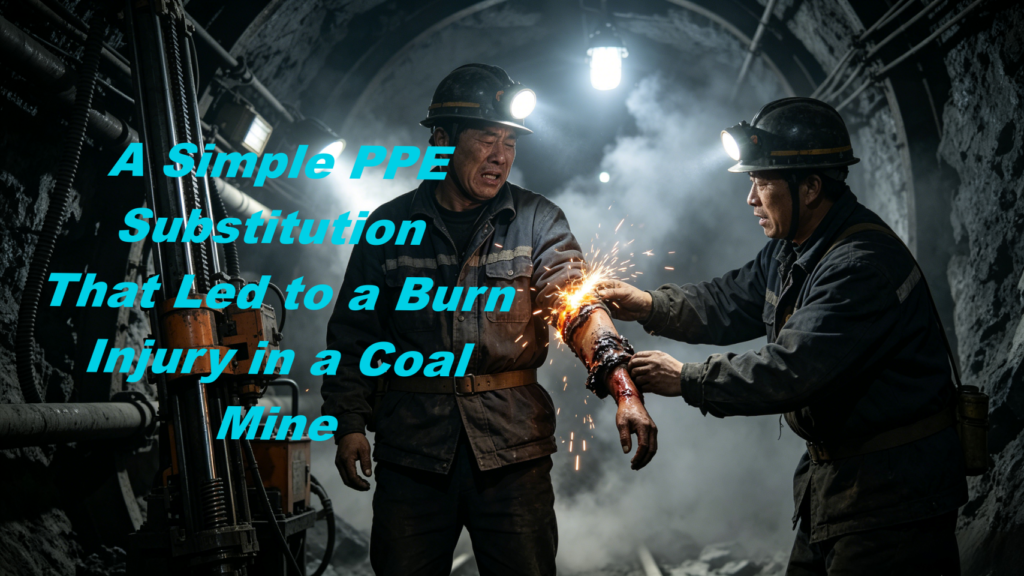
Thirteen days after distribution, during a routine drilling operation underground, a worker was exposed to normal flying sparks. This was a daily working condition with no previous incidents under cotton uniforms.
A small spark landed on the sleeve of the new uniform.
The fabric responded immediately. The polyester content softened and melted, bonding directly to the skin. When the worker attempted to remove the clothing, the molten fibers worsened the injury, resulting in burns, blistering, and skin damage on the forearm.
The case shows a simple truth: in underground operations, PPE is a safety barrier, not a purchasing choice. When 100% cotton workwear was replaced under time pressure with a polyester blend, a routine spark exposure caused avoidable burn injury. The problem was not only material non-compliance, but also insufficient procurement buffer time that forced a rushed decision without proper safety verification. In high-risk industries, any delay in planning can turn into a safety incident underground. Working with Passion Safety helps buyers maintain stable supply planning, compliant materials, and controlled lead times—ensuring that protection standards are never compromised by urgency.