Skip to content
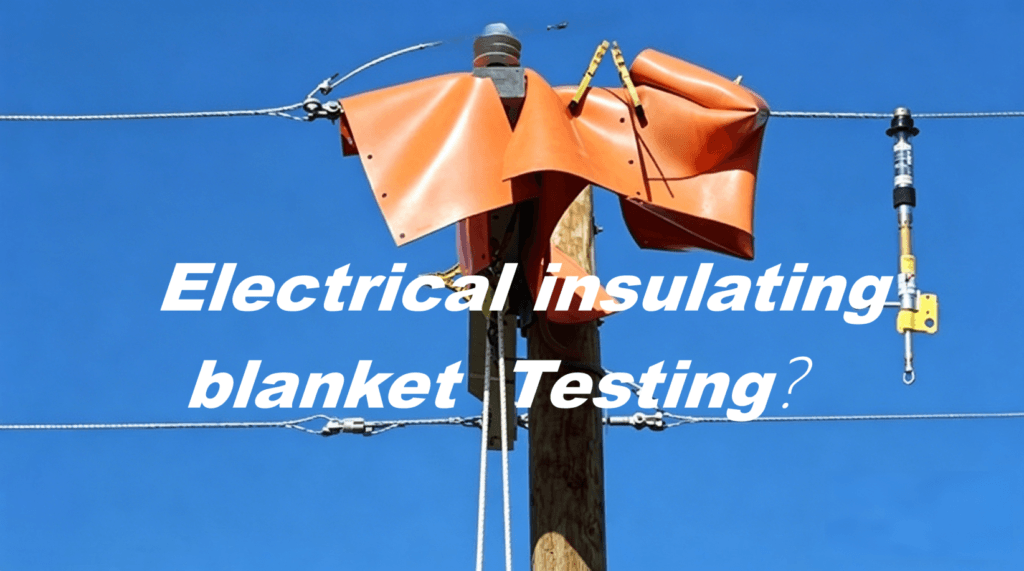
Passion Safety China Class 3 electrical insulating blankets are designed for high-voltage electrical work environments up to 20000V. To ensure reliable insulation performance and operator safety, water electrode testing is conducted according to standards such as ASTM D178-01 and DL/T 1145-2019. The purpose of the test is to detect hidden insulation defects and verify the blanket’s dielectric performance under high-voltage conditions.
Step 1: Pre-Test Preparation
Before testing, the Class 3 electrical insulating blanket should be conditioned for 24 hours in a controlled environment at 23±2°C and 50±5% relative humidity. The blanket surface must be cleaned carefully to remove dust, oil, moisture, or debris. Inspect the blanket for visible damage, wrinkles, cracks, or pinholes. At the same time, prepare the withstand voltage testing equipment, conductive medium, grounding system, and electrodes, ensuring all equipment is properly grounded and functioning correctly.
Step 2: Test Environment Setup
Place the electrical insulating blanket flat on the testing platform. Apply conductive water electrodes or wet conductive pads evenly on both sides of the blanket surface to create a stable conductive circuit. The electrode area should maintain uniform contact pressure. To reduce the risk of edge discharge or flashover, the distance between the electrode edge and the blanket edge should remain at least 50 mm.
Step 3: Voltage Application and Monitoring
According to Class 3 testing requirements, gradually increase the test voltage to 30000V at a controlled rate of approximately 1 kV per second. During the voltage rise process, continuously monitor leakage current and insulation stability. Any abnormal current fluctuation, discharge sound, or visible electrical activity should be recorded immediately.
Step 4: Withstand Voltage Test
Maintain the specified test voltage for 3 minutes under stable conditions. During this period, observe whether breakdown, flashover, or abnormal discharge occurs on the insulation blanket surface. The leakage current value should remain within the standard requirement of ≤10 mA throughout the test.
Step 5: Result Evaluation and Post-Test Inspection
If no breakdown, flashover, or abnormal discharge occurs and the leakage current remains within the acceptable range, the electrical insulating blanket is considered qualified for high-voltage use. If any abnormality is detected, power should be disconnected immediately. The blanket must then be inspected for hidden defects such as pinholes, surface aging, or material damage before retesting. Only products that successfully pass the test can be approved for live electrical work applications.